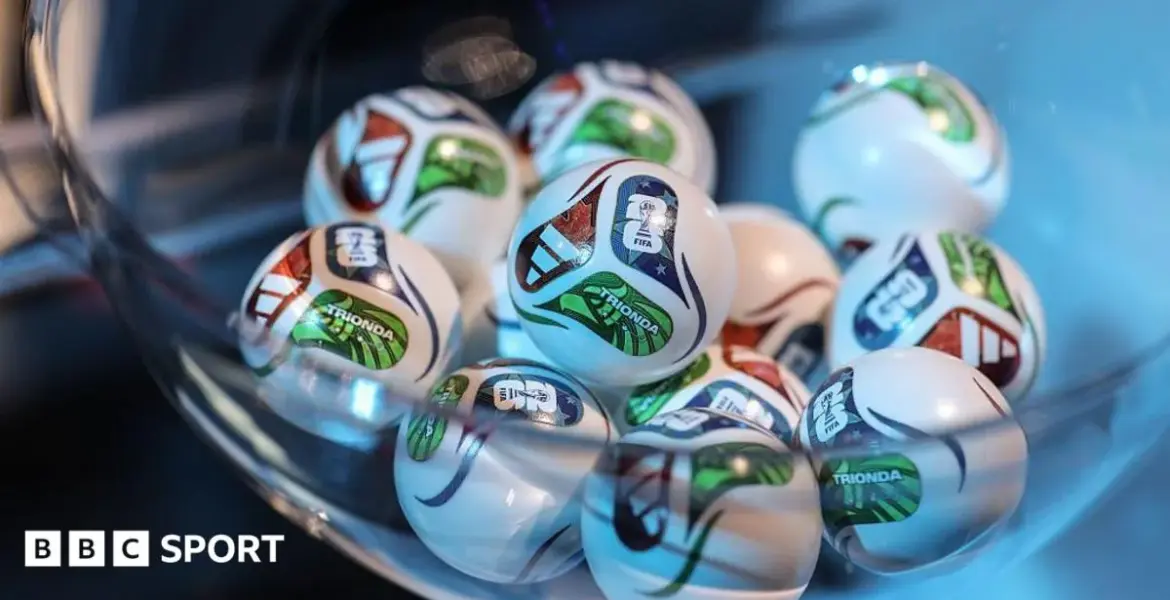

The World Cup 2026 semi-finals will feature the top four teams in Fifa‘s world rankings for the first time in the tournament’s history. Spain, Argentina, France, and England have all progressed to this stage, a development influenced by a change in Fifa’s draw process for this edition of the tournament.
This alteration ensured that the highest-ranked teams were placed in separate quadrants of the draw, preventing them from meeting before the semi-finals. For this to occur, each team needed to win their respective groups, which they successfully did. The new structure meant that Spain and Argentina could not face each other before the final, while England and France were positioned on opposite sides of the knockout bracket, with a potential path to meet either Spain or Argentina in the semi-finals.
Semi-final matchups and the Messi factor
The semi-final fixtures are set, with France scheduled to play Spain on Tuesday, followed by England against Argentina on Wednesday. The match between England and Argentina, taking place in Atlanta, will mark a significant occasion for Lionel Messi, who has never before faced England on the international stage despite making over 200 appearances for Argentina and scoring 125 goals.
Argentina secured their place in the semi-finals with a 3-1 extra-time victory over Switzerland in the quarter-finals. Messi did not score in that match, marking the first time in the tournament he failed to find the net. He currently leads the Golden Boot race alongside Kylian Mbappe of France, having scored eight goals. Messi also holds the record as the World Cup’s all-time leading goalscorer.
Pundits have weighed in on the challenge Messi presents. Micah Richards noted that England possesses the ability to outrun Argentina, but Messi’s unique talent makes him a formidable opponent. Richards highlighted Messi’s ability to operate in unexpected spaces, his exceptional technique, and his spatial awareness, comparing his influential presence to that of Jude Bellingham.
Chris Sutton suggested that Thomas Tuchel and the England players might be eager to face the current Argentina team, describing them as not a ‘great’ team but one that consistently finds a way to win. Former England striker Wayne Rooney pointed out that while Messi may be a defensive weakness for Argentina due to his lack of tracking back, he has a knack for delivering crucial moments of quality and making the right decisions in key situations.
The upcoming semi-final is a highly anticipated fixture, particularly for Argentina fans, according to South American football expert Tim Vickery. He stated that Messi’s extensive international career would feel incomplete without a match against England, a team Argentina fans view as their biggest rival. Vickery also mentioned that chants against England were heard during Argentina’s quarter-final match, indicating the intensity of the rivalry.
Historical rivalry and Fifa’s strategic change
The rivalry between England and Argentina is one of the most intense in international football, marked by historical moments such as Diego Maradona‘s ‘Hand of God’ goal in the 1986 World Cup quarter-final and David Beckham‘s red card 12 years later. The semi-final will be their first encounter in almost 21 years.
Messi’s international debut for Argentina came in August 2005, following his impressive performance in Argentina’s triumph at the World Youth Championship earlier that year. He was not involved in England’s match against Argentina in Geneva shortly after his debut, as he was serving a suspension. This suspension resulted from a red card received just 30 seconds into his international debut against Hungary, where he reacted to a foul by swinging his arm towards a defender.
In that match, England, under Sven-Goran Eriksson, secured a 3-2 victory, with Michael Owen scoring two late goals after the South Americans had taken the lead twice. Messi has an impressive scoring record against various opponents, having captained his country to World Cup glory in 2022. Among the nations he has faced more than once, only Qatar has managed to prevent him from scoring in their two encounters.
Fifa’s decision to separate the top-ranked teams in the draw was made with transparency, aiming to ensure competitive balance and preserve blockbuster matches for later stages of the tournament. This approach is similar to those seen at Wimbledon and in the new Champions League format, where seeds are kept apart. The governing body acknowledged that the expanded 48-team World Cup format, which includes an additional knockout round, made early meetings between group winners more likely, necessitating this tweak to the draw process. This strategy has resulted in the intended outcome, with the top four teams reaching the semi-finals.
Read Also
Source: bbc.co.uk
You may also like


Charlie Bradshaw is the Senior Football Correspondent at News-GB, covering the Premier League, the EFL and the England national side with ten years of reporting experience. He covered Merseyside football before going national. He holds a degree in Sports Journalism from Liverpool John Moores University and completed an NCTJ diploma. Based in Liverpool, he watches non-league sides and collects old match programmes. “The back page is only ever half the story.”